
Your jeans aren’t “just jeans” — most big denim brands still rate “Not Good Enough”
The Verdict
Keep the jeans you already love, and stop defaulting to the biggest denim names just because they’re everywhere. According to Good On You’s ratings, most of the largest denim brands land in the two lowest tiers: “Not Good Enough” or “We Avoid.” The one mainstream exception in this list is Levi’s, sitting at “It’s A Start” — which is basically the sustainability equivalent of “we’re getting there, don’t clap yet.”
If you want a simple shopping rule: Big denim is mostly a Skip for new purchases unless you’re buying secondhand. And if you’re craving something that’s actually built around circularity, the “Rated: Great” brand mentioned here (E.L.V. Denim) is the kind of model I wish more companies copied.
What I’m Wearing / What’s New (aka what the data is really saying)
Let’s talk about why denim is such a mess, because it’s not just about “fabric = bad.” Denim *should* be durable and long-wearing, which in theory makes it a more responsible wardrobe staple. But the modern denim machine has a few built-in problems.
Water usage is the headline villain. Good On You cites a stat from Levi’s: back in 2015, Levi’s noted that 3,781 litres of water were used to produce one pair of 501 jeans. That number alone is enough to make you look at your “I might keep these too” fitting-room pile differently.
Then there’s chemical dyes and indigo (including the resource load involved if you’re using natural indigo at scale), plus the reality that blended yarns (common in jeans today) are hard to recycle. Add the industry’s “take-make-waste” model — where repairs and garment care are not the priority — and you get denim that’s treated like a disposable trend item. Which is honestly wild for something that’s supposed to be the backbone of a closet.
How the biggest names rate (Good On You)
These are the largest denim brands listed, and most of them are… not passing the vibe check:
Rated “Not Good Enough”
- Wrangler
- Lee
- Diesel
- Calvin Klein
- Tommy Hilfiger
- AG Jeans
Rated “We Avoid”
- True Religion
- A.P.C
- Pepe Jeans
Rated “It’s A Start”
- Levi’s
And yes, that matters because these companies dominate huge portions of the supply chain. When the biggest players underperform, the whole category stays stuck.
The one “mainstream” exception: Levi’s (“It’s A Start”)
Good On You notes Levi’s has implemented a biodiversity policy and recycles fabric offcuts. But it still hasn’t joined the Pakistan Safety Accord (despite calls to do so), and it still uses leather and wool in its clothes. So: progress, but not a gold star.
A brand doing the work: E.L.V. Denim (“Great”)
This is the part I actually got excited about. Good On You calls E.L.V. Denim an industry pioneer because it uses entirely old and second-hand denim to create new styles by washing and recutting it. They manufacture local to their east London HQ to reduce shipping impact, and they offer custom made jeans.
That’s the energy: start with what already exists, then rebuild it into something wearable again.
How to Style It (without buying more on impulse)
Since the source is about sustainability ratings (not specific fits/washes/prices), I’m going to keep this practical and closet-first — the stuff I’d tell you while we’re standing in front of my Arts District rack with Mochi rubbing her face on my ankle.
Outfit formulas that make your current denim feel new
1) Denim + “nice” top + normal shoes
- Your most-worn jeans
- A sharper top you already own (think: structured, clean neckline, or a button-up)
- Shoes you can actually walk in
This is the easiest way to make “repeat jeans” look intentional instead of accidental.
2) Double denim, but broken up
- Denim on the bottom + denim jacket/shirt on top
- Add contrast with a belt/bag/shoe in a different texture
It reads styled, not costume-y, when the look has one clear point of contrast.
3) The repair-and-care glow-up
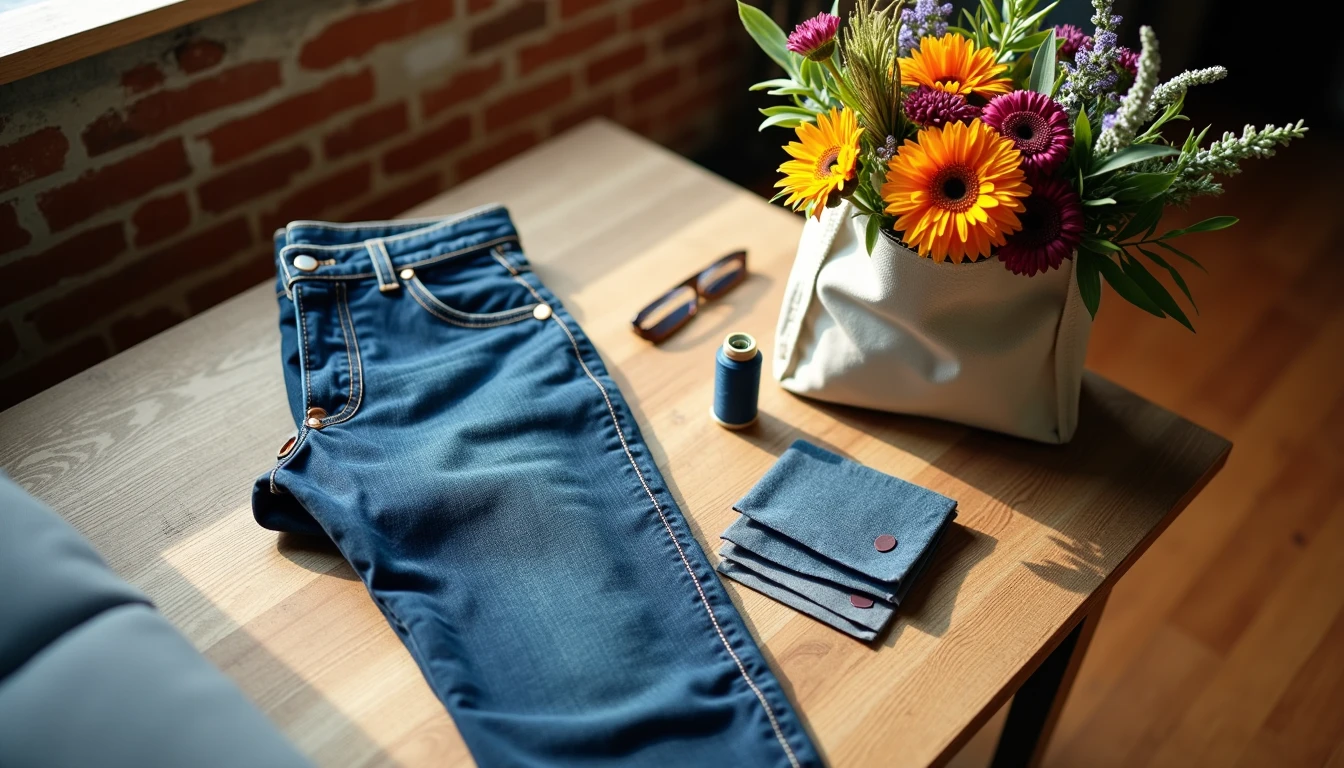
Before you replace jeans: try a hem, a patch, or even just a better wash routine (less frequent washing, air out, spot clean). Not glamorous, but it changes how long your denim stays in the rotation — which is the whole point.
Actually wearable vs. hype
- Actually wearable: repeating the same jeans and styling them three ways; buying secondhand; choosing brands built around rework (like E.L.V. Denim’s model).
- Hype you can skip: “new denim drop” mentality. When brands are rated “Not Good Enough” or “We Avoid,” the constant newness is part of the problem.
Sizing & Fit Notes (real talk, based on what we have)
The source doesn’t provide fit details (no rise, stretch content, or size range), so I’m not going to fake “runs small” claims. What I *can* tell you is how to shop smarter when sustainability is the goal:
- If you’re buying secondhand: prioritize measurements over the number on the tag. Denim sizing varies massively across eras and markets, and you’ll save yourself returns (and shipping emissions) by checking waist, hip, and inseam measurements first.
- If you’re buying from the biggest brands anyway: consider buying pre-owned first. You’re not “saving” a brand rating, but you *are* reducing demand for new production — and that’s a tangible impact lever.
Worth It?
The honest answer
If you’re shopping new from the biggest denim brands listed here, the sustainability case is weak: most are rated “Not Good Enough” or “We Avoid.” Levi’s being “It’s A Start” is better, but it’s not a clean conscience purchase.
What I’d do instead
- Keep it: jeans you already own and truly wear. The most responsible pair is the one that doesn’t get replaced.
- Return it (mentally): the idea that a huge brand automatically equals “better made” or “more responsible.”
- Worth considering: denim made from entirely old and second-hand denim and recut into new styles (like E.L.V. Denim, rated “Great” here). That’s a business model that aligns with the reality of how much denim already exists in the world.
And if you needed permission to stop chasing the “perfect new jeans” every season: consider this it. I wore this mindset three times already — and it never goes out of style.